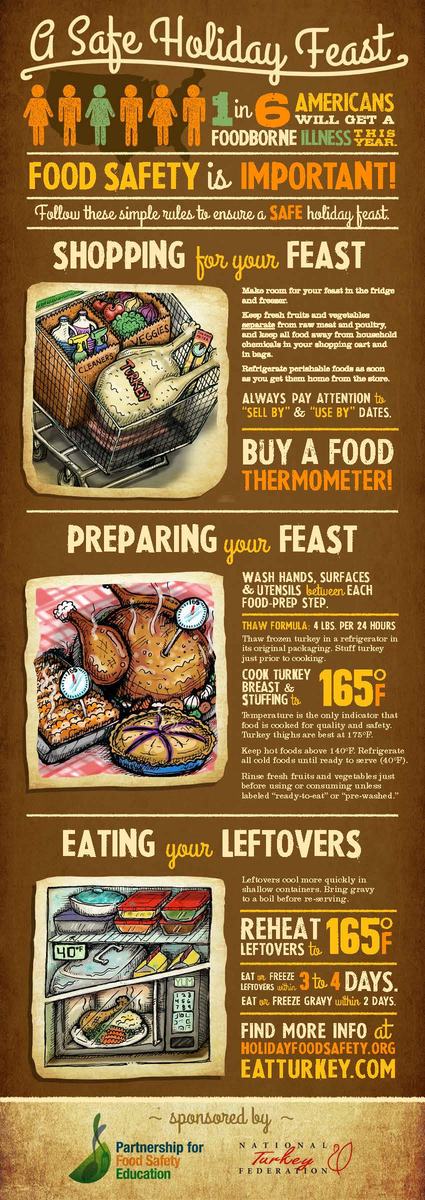
As we head into Thanksgiving, it is important to remind everyone that Thanksgiving can be one of the most fun holidays with all of the delicious foods and family gatherings. However, it can also be one of the scariest when it comes to foodborne illnesses. So, the Extension Office would like to give you some tips to help you make sure you have a safe and delicious holiday meal from your kitchen. The first step is to clean. Frequent cleaning and sanitizing help keep bacteria and viruses from spreading and contaminating food. Be sure to wash hands with warm water and soap for at least 20 seconds before and after handling food. The second step is to separate. Keep raw meat away from foods that won’t be cooked. The third step is to cook it to the safe correct internal temperature. The only way to be sure that your food is cooked properly is to use a food thermometer. You cannot tell if it is done by the color or the juices. And the fourth and final step is to chill. Chill leftovers and takeout foods within 2 hours. Also be sure to use a refrigerator thermometer to monitor the temperature to make sure it is at 40 degrees or below.
As for the turkey, it is safest to thaw a frozen turkey in the refrigerator. We recommend that you leave it in the original packaging, place in a shallow pan, and allow 24 hours thaw time for each 4-5 pounds of meat. Cook the turkey to an internal temperature of 165 degrees as measured by a food thermometer in the thickest part of both the bird’s thigh and breast. A stuffed turkey will take longer to cook than an unstuffed turkey. The stuffing inside must cook to 165 degrees as well. And last but not least, be sure to get your leftovers into the fridge within 2 hours and use within 3-4 days, reheating them to 165 degrees.